Philosophy

Two Philosophy students receive Advanced Doctoral Students Award

January 30, 2017
Decorative image

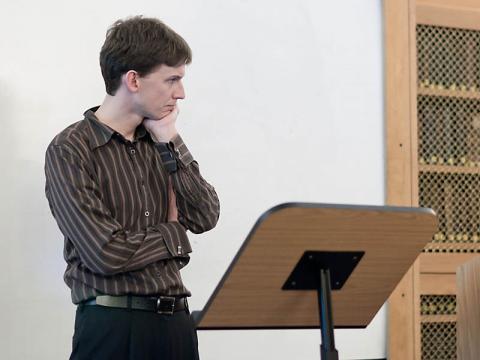
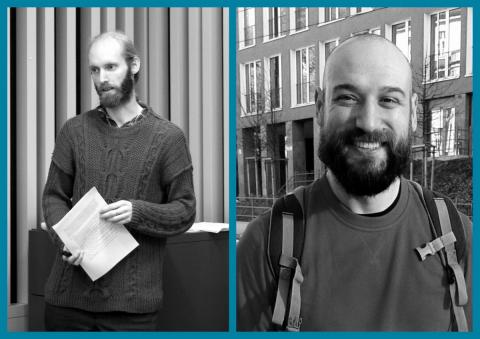
Warmest congratulations to Attila Hangai and Edi Pavlovic, who have been awarded the Award for Advanced Doctoral Students,

Well done, guys!

ToPHSS Lecture: Between Science and Show: Human Zoos in the 19th and 20th Centuries

Type: 
Lecture
Building: 
Nador u. 15
Room: 
106
Date: 
January 24, 2017 - 3:30pm to 5:10pm

In this presentation we consider historically specific ways and sites of knowing such as world’s fairs, zoos, circuses and freak shows, which fundamentally structured how visitors made sense of humanness and civilization. These diverse types of exhibit were at the intersection of scientific authority and popular hunger for exoticism, and require an interdisciplinary theoretical approach combining critical race, postcolonial and gender studies.

1st Central European Graduate Workshop in Ancient Philosophy

Building: 
Nador u. 15
Room: 
Quantum 101
Date: 
March 25, 2017 - 10:00am to March 26, 2017 - 7:00pm

This workshop brings together students based in the Central European region and working on innovative and groundbreaking doctoral projects in Ancient Philosophy. After presenting their work, each student will receive comments from a respondent working in their field followed by an open discussion of the issues and questions arising from their work.

There is no registration fee, but please RSVP to the organisers.

PROGRAM

Materiality and knowledge: Towards an epistemology for the material culture of science

Type: 
Budapest colloquium talks
Building: 
Nador u. 15
Room: 
103
Date: 
February 7, 2017 - 5:30pm to 7:00pm

Recently, some philosophers of science have argued that epistemology should be extended in order to encompass scientific instruments as material forms of knowledge. One line of argument for this position has consisted in drawing a strong analogy between the traditional concept of knowledge as justified true belief and to argue that what makes the alliance of these three components into proper knowledge can and is satisfied by scientific instruments. Consequently, scientific instruments are not just conductive to scientific knowledge, they are --literally-- scientific knowledge.

Successful Defence of Işık Sarıhan

January 7, 2017

Simon Rippon Promoted to the Rank of Associate Professor

November 30, 2016
Decorative image

The Department of Philosophy is pleased to announce that Simon Rippon has been promoted to the rank of Associate Professor, valid from December 1, 2016.

Warmest congratulations, Simon!

ToPHSS Lecture: The Categorized and the Categorical Human in Human Rights

Type: 
Lecture
Building: 
Nador u. 15
Room: 
106
Date: 
February 7, 2017 - 1:30pm to 3:10pm

The question of what constitutes a human being, being human, humanness or humanity, in all its variations, has been a longstanding feature in academic and public discourse, and particularly in its relation with human rights. The varied answers and perspectives can influence attitudes and social behaviour that are either in line with or in opposition to human rights norms. The lecture will consider the various perspectives from philosophical, biological, theological, sociological and legal sources, and how these categorizations intersect with human rights objectives.
Research Assistant

ToPHSS Lecture: Humanization and Dehumanization within Enlightenment Debates: An Attempt to Contextualizing the Ape/Human Divide.

Type: 
Lecture
Building: 
Nador u. 15
Room: 
106
Date: 
January 24, 2017 - 1:30pm to 3:10pm

What do “orangutans” make to our understanding of Enlightenment “science of man” – considered by historiography as a major contribution to the shaping of human and social sciences? How do they connect with the conceptualization of humankind and to what extent does such a conceptualization interplay with the humanization and/or dehumanization of peoples? My paper deals with the multiples uses to which comparative anatomy was put in different disciplinary frameworks, such as natural and philosophical histories, political as well as legal discourses, and even trials, in eighteenth-century Brit

Narrative

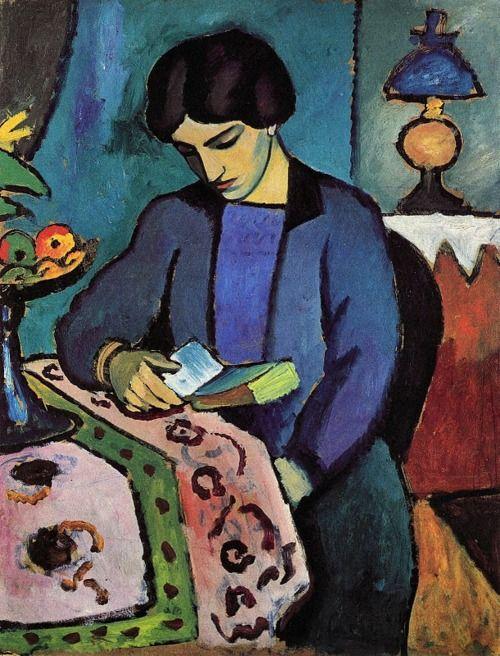
August Macke; Blue Girl Reading
Building: 
Nador u. 15
Room: 
103
Date: 
March 28, 2017 - 3:00pm to 7:30pm

“Narrative” is often used as just a fancy synonym for “story”, yet there is more to it. A story can be narrated in many ways, representing the constitutive events differently, and so there can be many narratives telling the same core story. Representing events, in language or through images, is a fundamental way of understanding the world of purposeful human action. However, narratives become especially interesting in special cases.